

Inducing grammar change: can input frequency modify acceptability judgments in an experiment?
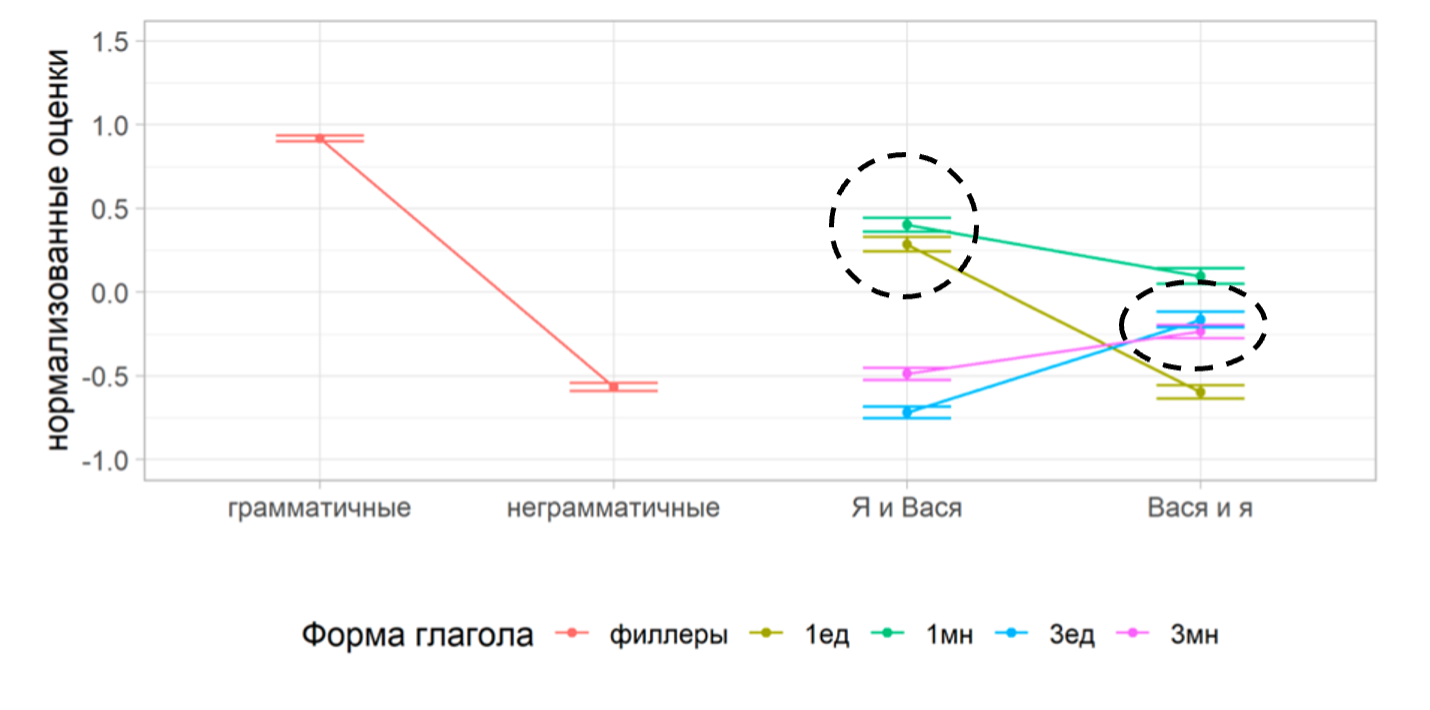
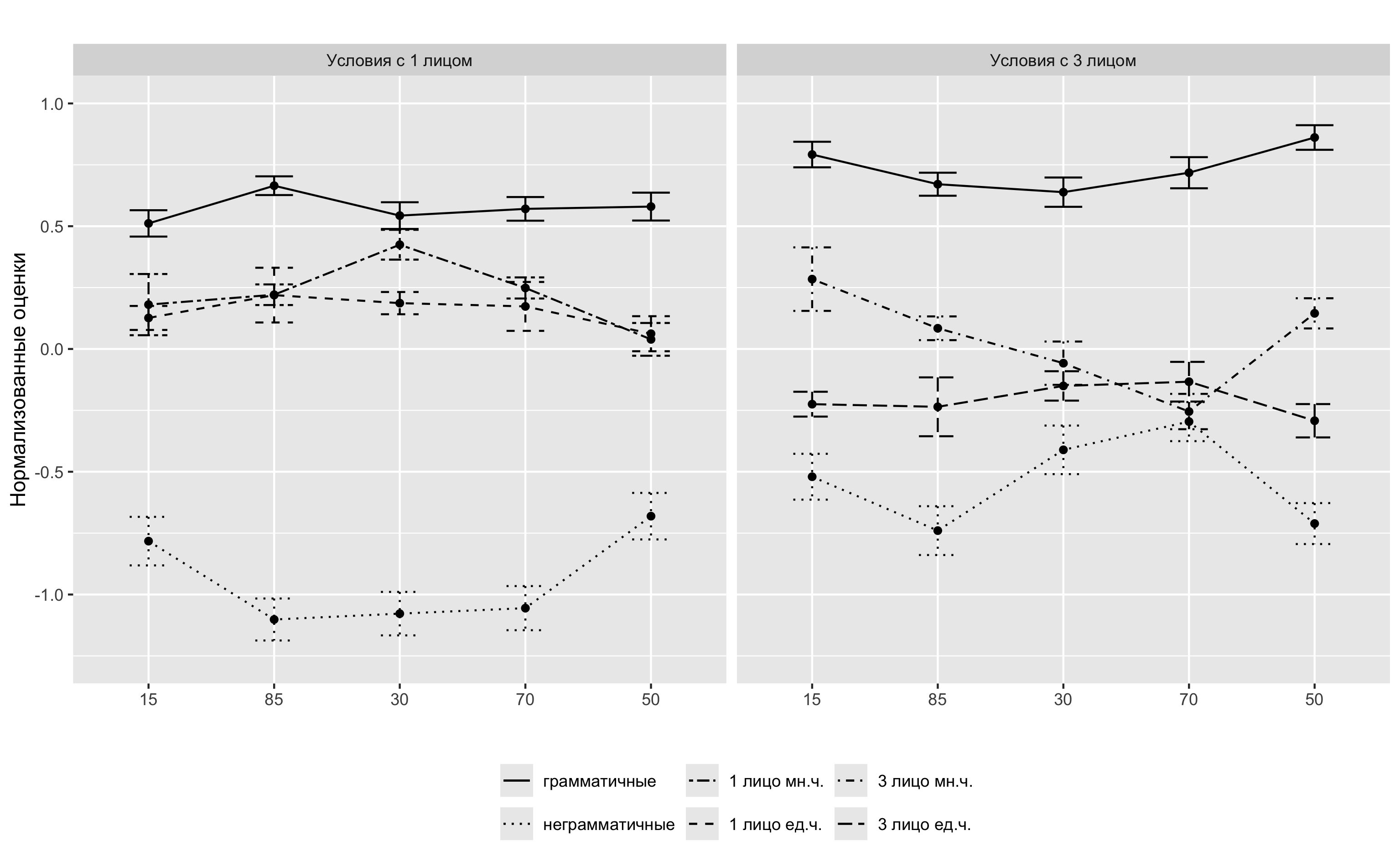
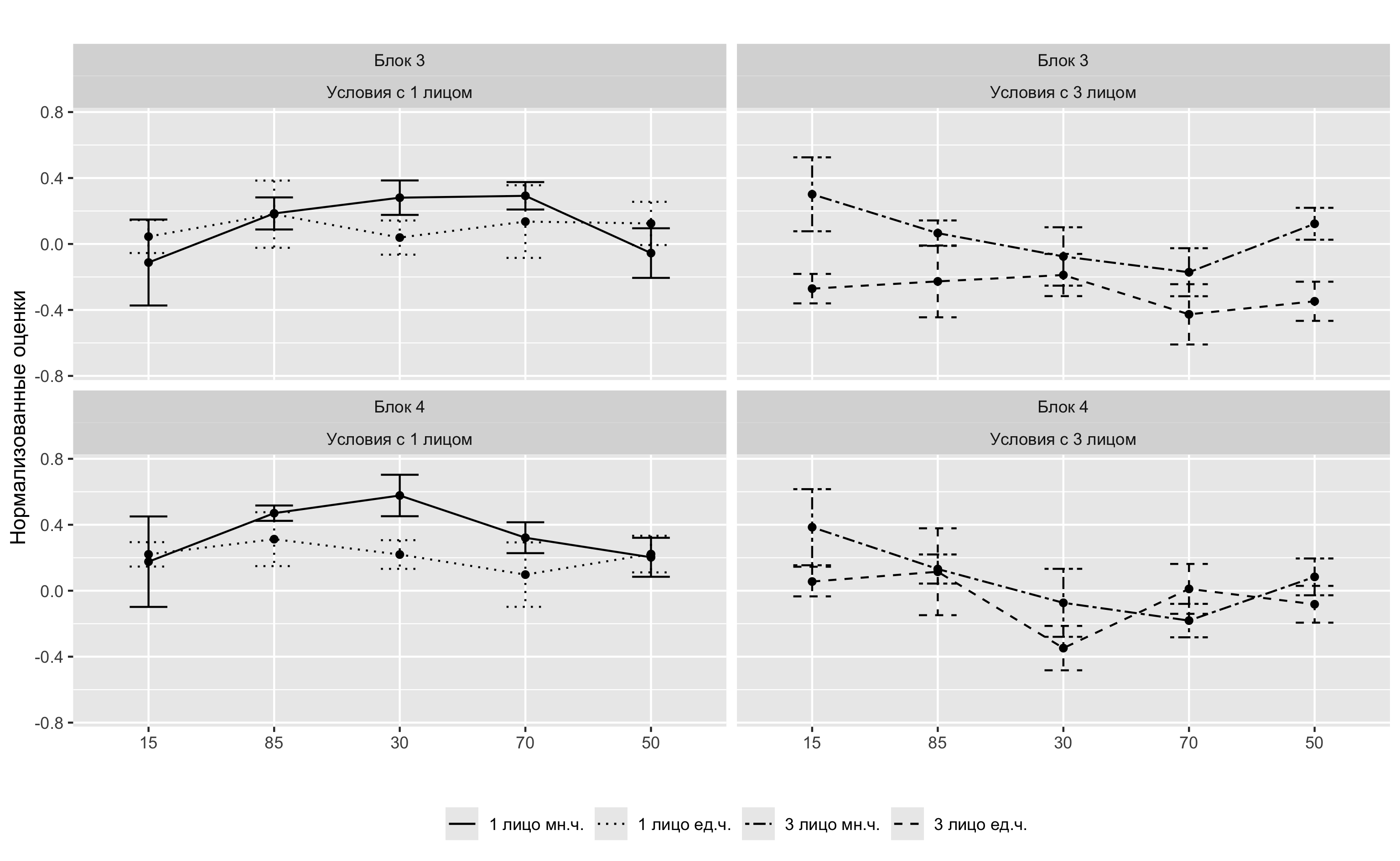
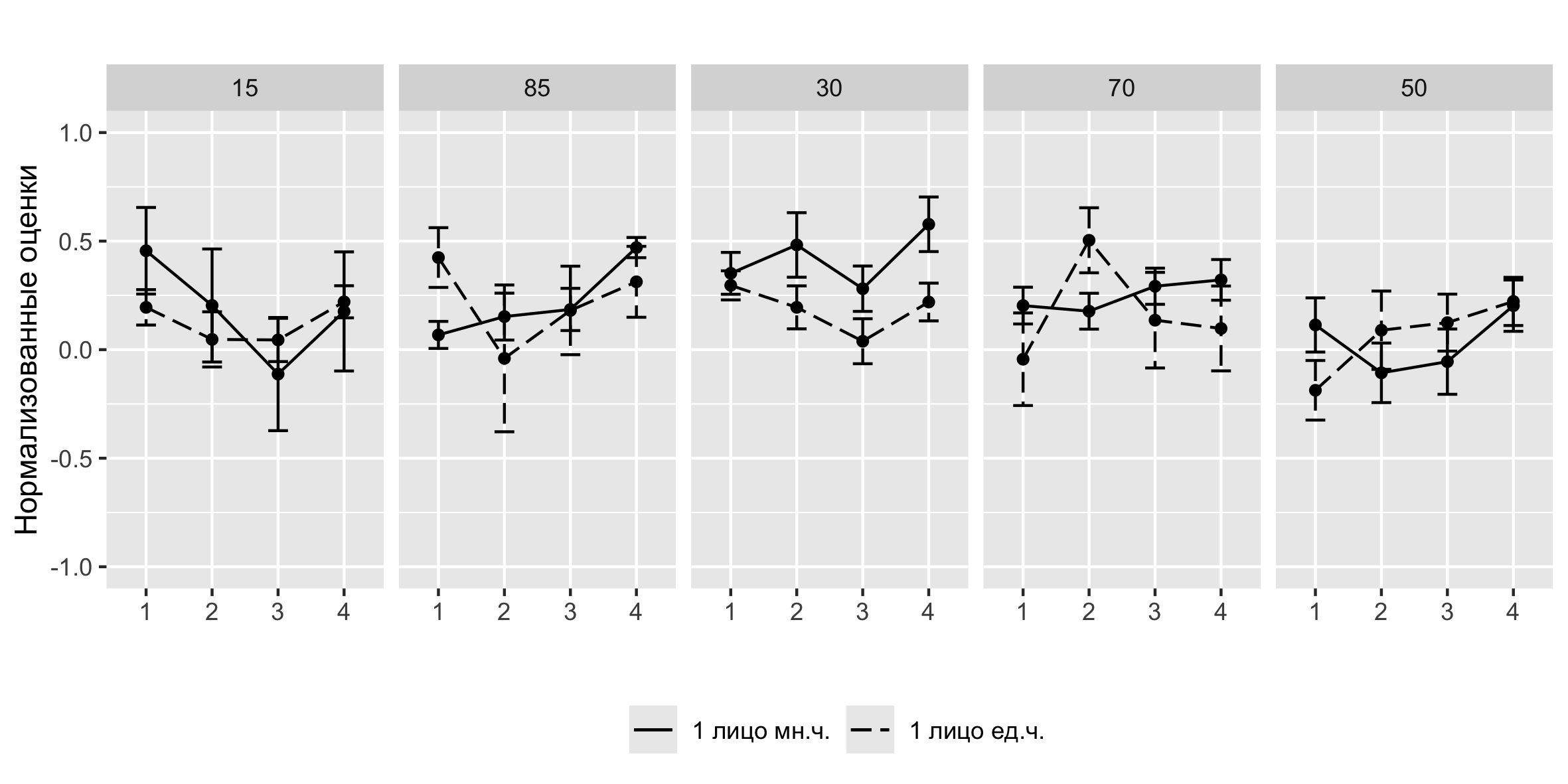
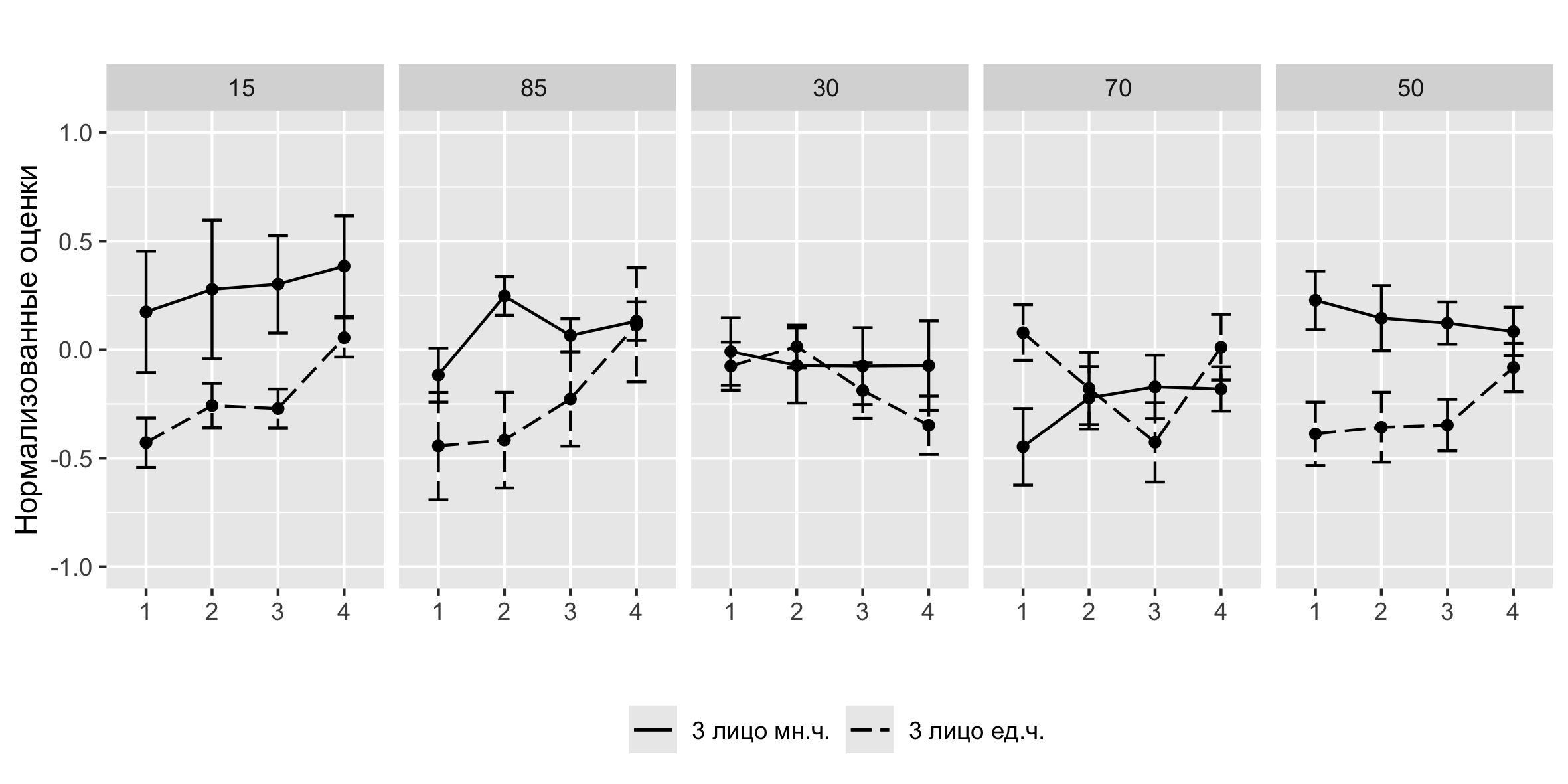
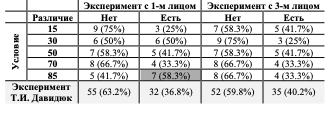
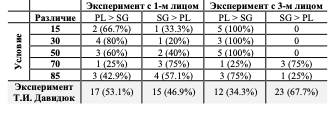
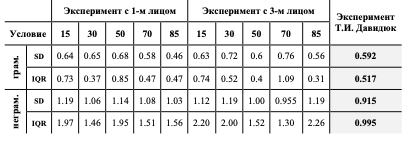
This study experimentally investigates the role of statistical learning in grammatical change. We test the hypothesis that speakers adapt their grammatical intuitions by tracking distributional frequencies in variable linguistic input. Although statistical learning is widely acknowledged as a key mechanism in language adaptation, the precise impact of changing input distributions on acceptability judgments remains unclear. To address this, we designed an experiment simulating grammatical change within intra-lingual variation. The study examines variable person-number agreement with conjoined subjects in Russian, focusing on structures containing both pronominal and nominal conjuncts. The core question we are investigating is whether manipulating the frequency ratio of competing grammatical variants in the input affects speakers' judgements of acceptability. We conducted two parallel experiments, each focusing on a distinct pair of agreement strategies. These pairs were chosen based on prior experimental work; within each pair, the two variants were matched in acceptability, with one pair occupying the high end and the other the middle range of the acceptability scale. Using a between-subjects design, we manipulated the presentation frequency of each variant across five levels. We hypothesized that exposure to different frequency ratios would not only shift the absolute acceptability of variants but also induce a significant difference between them. The results, however, were inconclusive. Although we observed a shift in ratings, the effect was anomalous and non-systematic, preventing us from interpreting it as evidence for statistical learning; it may instead reflect a methodological artifact. However, we identified a robust link between acceptability judgments and the well-formedness of the co-occurring linguistic material.
Figures
















While nobody left any comments to this publication.
You can be first.
Anisimova, A. G. (2025). The effect of linear distance on predicate agreement with quantitative nouns in Russian, Konferentsiya molodykh issledovateley po eksperimentalnoy lingvistike «Eksperimentalnye issledovaniya yazyka» [The Young Researchers Conference on Experimental Linguistics "Experimental Studies of Language"], 19–21 June 2025, Moscow, Russia. (In Russian)
Belova, D. D. and Davydyuk, T. I. (2022). Predicate agreement with coordinated subjects in Russian, Typology of Morphosyntactic Parameters, 5 (1), 13–34. (In Russian)
Belova, D. D. and Davydyuk, T. I. (2023). Agreement with coordinated subjects containing a personal pronoun: Experimental data from Russian, Rhema, 2, 53–88. DOI: 10.31862/2500-2953-2023-2-53-88 (In Russian)
Belova, S. S. and Kharlashina, G. A. (2015). Incidental, Implicit and Statistical learning in Second language acquisition: experimental Data on Semantics, Morphology and Syntax, Voprosy Psikholingvistiki, 26, 22–31. (In Russian)
Burlak, S. A. and Starostin, S. A. (2005). Sravnitelno-istoricheskoe yazykoznanie [Comparative linguistics], Akademiya, Moscow, Russia. (In Russian
Davydyuk, T. I. (2023). Predicate agreement and word order: An experimental study, Russkiy yazyk v nauchnom osveshchenii, 2 (46), 220–234. DOI: 10.31912/rjano-2023.2.9 (In Russian)
Davydyuk, T. I. (2025). Feature asymmetries of predicate agreement in Russian (an experimental study), Ph.D. Thesis, Philology, Moscow, Russia. (In Russian)
Gerasimova, A. A. (2023). Quantitative Methods of Investigating Grammar (A Case Study of Agreement Variation in Russian), Ph.D. Thesis, Moscow, Russia. (In Russian)
Gerasimova, A. A. and Lyutikova, E. A. (2022). Linguistic experiment on the Yandex. Toloka crowdsourcing platform: evaluation of research capacity, Zeitschrift für Slavische Philologie, 78 (1), 175–206. (In Russian)
Gerasimova, A. A., Lyutikova, E. A. and Pas'ko, L. I. (2024). Linguistic competence through the lens of grammatical variation. Part 2. Quantitative evaluation, Moscow University Philology Bulletin, 5, 111–128. DOI: 10.55959/MSU0130-0075-9-2024-47-05-9 (In Russian)
Gritsenko, I. O. (2024). Person-number agreement with a conjoined subject containing a pronoun in Russian: The factor of nominal conjunct abstractness/concreteness, Rhema, 4, 89–106. DOI: 10.31862/2500-2953-2024-4-89-106 (In Russian)
Gritsenko, I. O. (2025). Lexical Distributivity and Variable Subject-Verb Agreement in Russian, Konferentsiya molodykh issledovateley po eksperimentalnoy lingvistike «Eksperimentalnye issledovaniya yazyka» [The Young Researchers Conference on Experimental Linguistics "Experimental Studies of Language"], 19–21 June 2025, Moscow, Russia. (In Russian)
Lesnyak, K. K. (2025). The Problem of Choosing a Noun Form When Composing Coordinating and Incoordinating Modifiers in Russian: An Experimental Study, Konferentsiya molodykh issledovateley po eksperimentalnoy lingvistike «Eksperimentalnye issledovaniya yazyka» [The Young Researchers Conference on Experimental Linguistics "Experimental Studies of Language"], 19–21 June 2025, Moscow, Russia. (In Russian)
Lyutikova, E. A. and Gerasimova, A. A. (ed.) (2021). Russkie ostrova v svete eksperimentalnykh dannykh [Russian Islands in the Light of Experimental Data], Buki-Vedi, Moscow, Russia. (In Russian)
Panchenko, Yu. D. (2021). Yes and no answers to Russian negative polar questions, Rhema, 4, 38–68. DOI: 10.31862/2500-2953-2021-4-38-68 (In Russian)
Pasko, L. I. (2023). Against ATB-analysis of partial agreement in Russian: An experimental study, Rhema, 2, 89–103. DOI: 10.31862/2500-2953-2023-2-89-103 (In Russian)
Pekelis, O. E. (2013). Partial Agreement with Subjects Linked by a Correlative Conjunction: A Corpus-Based Study of Main Regularities, Voprosy Yazykoznaniya, 4, 55–86. (In Russian)
Pekelis, O. E. (2013). Sochinenie. Materialy dlya proekta korpusnogo opisaniya russkoy grammatiki [Coordination. Materials for the project of corpus description of the Russian grammar (http://rusgram.ru/)], available at: http://rusgram.ru/Sochinenie (Accessed 02 December 2025). (In Russian)
Petelin, D. O. (2020). Statisticheskaya moshchnost i chuvstvitelnost shkal Likerta razlichnoy razmernosti v eksperimentalnom sintaksise [Statistical power and sensitivity of Likert scales with different number of divisions in experimental syntax], Term paper, Moscow, Russia, available at: https://expsynt.com/wp-content/uploads/2020_Petelin_term-paper.pdf (Accessed 02 December 2025). (In Russian)
Petelin, D. O. (2021). Vliyanie modalnosti predyavleniya stimulov na otsenki priemlemosti v eksperimentalnoy lingvistike [Effect of stimuli presentation modality for acceptability judgments in experimental linguistics], BA Thesis, Moscow, Russia, available at: https://expsynt.com/wp-content/uploads/2021_Petelin_thesis.pdf (Accessed 02 December 2025). (In Russian)
Savchuk, S. O., Arkhangelskiy, T. A., Bonch-Osmolovskaya, A. A., Donina, O. V., Kuznetsova, Yu. N., Lyashevskaya, O. N., Orekhov, B. V. and Podryadchikova, M. V. (2024). Russian National Corpus 2.0: New opportunities and development prospects, Voprosy Yazykoznaniya, 2, 7–34. DOI: 10.31857/0373-658X.2024.2.7-34 (In Russian)
Studenikina, K. A. (2023). The influence of conjunct animacy and linear predicate position on the choice of predicate agreement strategy, Uchebnaya konferentsiya po eksperimentalnoy lingvistike «Eksperimentalnye issledovaniya yazyka» [Educational Conference on Experimental Linguistics "Experimental Studies of Language"], 22 June 2023, Moscow, Russia. (In Russian)
Bates, D., Kliegl, R., Vasishth, S. and Baayen, H. (2015). Parsimonious mixed models, arXiv preprint arXiv:1506.04967, 21 p., available at: https://arxiv.org/abs/1506.04967 (Accessed 10 December 2025). (In English)
Belova, D. (2022). Evaluation and reading time of predicate agreement with conjuncts, Proceedings of 13th International Conference of Experimental Linguistics, 21–24. (In English)
Braze, F. D. (2002). Grammaticality, acceptability and sentence processing: A psycholinguistic study, Ph.D. Thesis, University of Connecticut, CT, USA. (In English)
Bresnan, J. (2007). Is syntactic knowledge probabilistic? Experiments with the English dative alternation, in Featherston, S. and Sternefeld, W. (ed.), Roots: Linguistics in search of its evidential base, De Gruyter, Berlin, Germany; N.Y., USA, 77–96. (In English)
Brown, J. M. M., Fanselow, G., Hall, R. and Kliegl, R. (2021). Middle ratings rise regardless of grammatical construction: Testing syntactic variability in a repeated exposure paradigm, PLoS ONE, 16 (5), e0251280, available at: https://doi.org/10.1371/journal.pone.0251280 (Accessed 10 December 2025). (In English)
Bybee, J. (2023). What Is Usage‐Based Linguistics?, in Díaz-Campos, M. and Balasch, S. (ed.), The handbook of usage‐based linguistics, John Wiley & Sons, Hoboken, USA, 7–29. (In English)
Chaves, R. P. and Dery, J. E. (2014). Which subject islands will the acceptability of improve with repeated exposure, Proceedings of the 31st West Coast Conference on Formal Linguistics, 96–106. (In English)
Chaves, R. P. and Dery, J. E. (2019). Frequency effects in subject islands, Journal of Linguistics, 55 (3), 475–521. DOI: 10.1017/S0022226718000294 (In English)
Chaves, R. P. and Putnam, M. T. (2020). Unbounded dependency constructions: Theoretical and experimental perspectives, Vol. 10, Oxford University Press, Oxford, UK. (In English)
Coussé, E. and von Mengden, F. (ed.) (2014). Usage-based approaches to language change, John Benjamins Publishing Company, Amsterdam, Netherlands. (In English)
Cowart, W. (1997). Experimental syntax: Applying objective methods to sentence judgments, Sage Publications, Thousand Oaks, CA, USA. (In English)
Crawford, J. (2012). Using syntactic satiation to investigate subject islands, Proceedings of the 29th West Coast Conference on Formal Linguistics, 38–45. (In English)
Culbertson, J. and Gross, S. (2009). Are linguists better subjects?, The British Journal for the Philosophy of Science, 60 (4), 721–736. DOI: 10.1093/bjps/axp032 (In English)
Dąbrowska, E. (2010). Naive vs. expert intuitions: An empirical study of acceptability judgments, The Linguistic Review, 27 (1), 1–23. DOI: 10.1515/tlir.2010.001 (In English)
Díaz-Campos, M. and Balasch, S. (ed.) (2023). The handbook of usage-based linguistics, John Wiley & Sons, Hoboken, USA. (In English)
Do, M. L. and Kaiser, E. (2017). The relationship between syntactic satiation and syntactic priming: A first look, Frontiers in Psychology, 8, 18–51. DOI: 10.3389/fpsyg.2017.01851 (In English)
Featherston, S. (2007). Data in generative grammar: The stick and the carrot, Theoretical Linguistics, 33 (3), 269–318. DOI: 10.1515/TL.2007.020 (In English)
Francom, J. C. (2009). Experimental syntax: Exploring the effect of repeated exposure to anomalous syntactic structure-evidence from rating and reading tasks, Ph.D. Thesis, University of Arizona, AZ, USA. (In English)
Gerbrand, A., Gredebäck, G., Hedenius, M., Forssman, L. and Lindskog, M. (2022). Statistical learning in infancy predicts vocabulary size in toddlerhood, Infancy, 27 (4), 700–719. (In English)
Gordon, P. and Hendrick, R. (1997). Intuitive knowledge of linguistic co-reference, Cognition, 62 (3), 325–370. DOI: 10.1016/s0010-0277(96)00788-3 (In English)
Gries, S. T. (2021). Statistics for linguistics with R, De Gruyter Mouton, Berlin, Germany. (In English)
Hiramatsu, K. (2001). Accessing linguistic competence: Evidence from children’s and adults’ acceptability judgments, Ph.D. Thesis, University of Connecticut, CT, USA. (In English)
Isbilen, E. S. and Christiansen, M. H. (2022). Statistical learning of language: A meta‐analysis into 25 years of research, Cognitive Science, 46 (9), e13198. DOI: 10.1111/cogs.13198 (In English)
Kidd, E., Arciuli, J., Christiansen, M. H. and Smithson, M. (2023). The sources and consequences of individual differences in statistical learning for language development, Cognitive Development, 66, 101335. DOI: 10.1016/j.cogdev.2023.101335 (In English)
Kidd, E. and Arciuli, J. (2016). Individual differences in statistical learning predict children's comprehension of syntax, Child development, 87 (1), 184–193. DOI: 10.1111/cdev.12461 (In English)
Langsford, S., Perfors, A., Hendrickson, A. T., Kennedy, L. A. and Navarro, D. J. (2018). Quantifying sentence acceptability measures: Reliability, bias, and variability, Glossa: a journal of general linguistics, 3 (1), 1–34. https://doi.org/10.5334/gjgl.396 (In English)
Lau, J. H., Clark, A. and Lappin, S. (2017). Grammaticality, acceptability, and probability: A probabilistic view of linguistic knowledge, Cognitive Science, 41 (5), 1201–1241. DOI: 10.1111/cogs.12414 (In English)
Lavechin, M., De Seyssel, M., Titeux, H., Bredin, H., Wisniewski, G., Cristia, A. and Dupoux, E. (2022). Statistical learning bootstraps early language acquisition, pp. 1–25, available at: https://osf.io/preprints/psyarxiv/rx94d_v1 (Accessed [10.12.2025]). (In English)
Linzen, T. and Oseki, Y. (2018). The reliability of acceptability judgments across languages, Glossa: a journal of general linguistics, 3 (1), Art. 100, 1–25. DOI: 10.5334/gjgl.528 (In English)
Lu, J., Frank, M. C. and Degen, J. (2024). A Meta-analysis of Syntactic Satiation in Extraction from Islands, Glossa Psycholinguistics, 3 (1), 1–33. DOI: 10.5070/G60111425 (In English)
Lu, J., Lassiter, D. and Degen, J. (2021). Syntactic satiation is driven by speaker-specific adaptation, Proceedings of the Annual Meeting of the Cognitive Science Society, 43, 1493–1499. (In English)
Lu, J., Wright, N. and Degen, J. (2022). Satiation effects generalize across island types, Proceedings of the Annual Meeting of the Cognitive Science Society, 44, 2724–2730. (In English)
Marty, P., Chemla, E. and Sprouse, J. (2020). The effect of three basic task features on the sensitivity of acceptability judgment tasks, Glossa, 5 (1), Art. 72, 1–23. DOI: 10.5334/gjgl.980 (In English)
Nagata, H. (1992). Anchoring effects in judging grammaticality of sentences, Perceptual and Motor Skills, 75 (1), 159–164. (In English)
R Core Team (2025). R: A Language and Environment for Statistical Computing, R Foundation for Statistical Computing, Vienna, Austria, available at: https://www.R-project.org/ (Accessed [укажите дату обращения]). (In English)
Reali, F. (2017). Acceptability of Dative Argument Structure in Spanish: Assessing Semantic and Usage‐Based Factors, Cognitive Science, 41 (8), 2170–2190. DOI: 10.1111/cogs.12459 (In English)
Romberg, A. R. and Saffran, J. R. (2010). Statistical learning and language acquisition, Wiley Interdisciplinary Reviews: Cognitive Science, 1 (6), 906–914. DOI: 10.1002/wcs.78 (In English)
Schoenmakers, G. J. (2023). Linguistic judgments in 3D: The aesthetic quality, linguistic acceptability, and surface probability of stigmatized and non-stigmatized variation, Linguistics, 61 (3), 779–824. DOI: 10.1515/ling-2021-0179 (In English)
Schütze, C. (1996). The empirical base of linguistics: Grammaticality judgments and linguistic methodology, Chicago University Press, Chicago, IL, USA; London, UK. (In English)
Schütze, C. (2011). Linguistic evidence and grammatical theory, Wiley Interdisciplinary Reviews: Cognitive Science, 2 (2), 206–221. (In English)
Schütze, C. and Sprouse, J. (2014). Judgment data, in Sharma, D. and Podesva, R. (ed.), Research methods in linguistics, Cambridge University Press, Cambridge, UK, 27–50. (In English)
Snow, C. and Meijer, G. (1977). On the secondary nature of syntactic intuitions, in Greenbaum, S. (ed.), Acceptability in language, Mouton, The Hague, Netherlands, 163–177. (In English)
Snyder, W. (2000). An experimental investigation of syntactic satiation effects, Linguistic Inquiry, 31 (3), 575–582. DOI: 10.1162/002438900554479 (In English)
Snyder, W. (2022). On the nature of syntactic satiation, Languages, 7 (1), 38. DOI: 10.3390/languages7010038 (In English)
Sprouse, J. (2007). Continuous acceptability, categorical grammaticality, and experimental syntax, Biolinguistics, 1 (1), 123–134. (In English)
Sprouse, J. (2009). Revisiting satiation: Evidence for an equalization response strategy, Linguistic Inquiry, 40 (2), 329–341. (In English)
Sprouse, J. and Almeida, D. (2017). Setting the empirical record straight: Acceptability judgments appear to be reliable, robust, and replicable, Behavioral and Brain Sciences, 40, e311. DOI: 10.1017/S0140525X17000590, e311 (In English)
Sprouse, J., Yankama, B., Indurkhya, S., Fong, S. and Berwick, R. C. (2018). Colorless green ideas do sleep furiously: Gradient acceptability and the nature of the grammar, The Linguistic Review, 35 (3), 575–599. DOI: 10.1515/tlr-2018-0005 (In English)
Voeten, C. C. (2020). buildmer: Stepwise elimination and term reordering for mixed-effects regression, R package version 2.3. (In English)
Vogel, R. (2019). Grammatical taboos: An investigation on the impact of prescription in acceptability judgement experiments, Zeitschrift für Sprachwissenschaft, 38 (1), 37–79. DOI: 10.1515/zfs-2019-0002 (In English)
Zehr, J. and Schwarz, F. (2018). PennController for Internet Based Experiments (IBEX), available at: https://doi.org/10.17605/OSF.IO/MD832 (Accessed 10.12.2025). (InEnglish)
This research is supported by the Russian Science Foundation, RSF project №25-78-00071, https://rscf.ru/project/25-78-00071/, realized at Lomonosov Moscow State University.