

Linguistics of algorithmic logic in viral communication
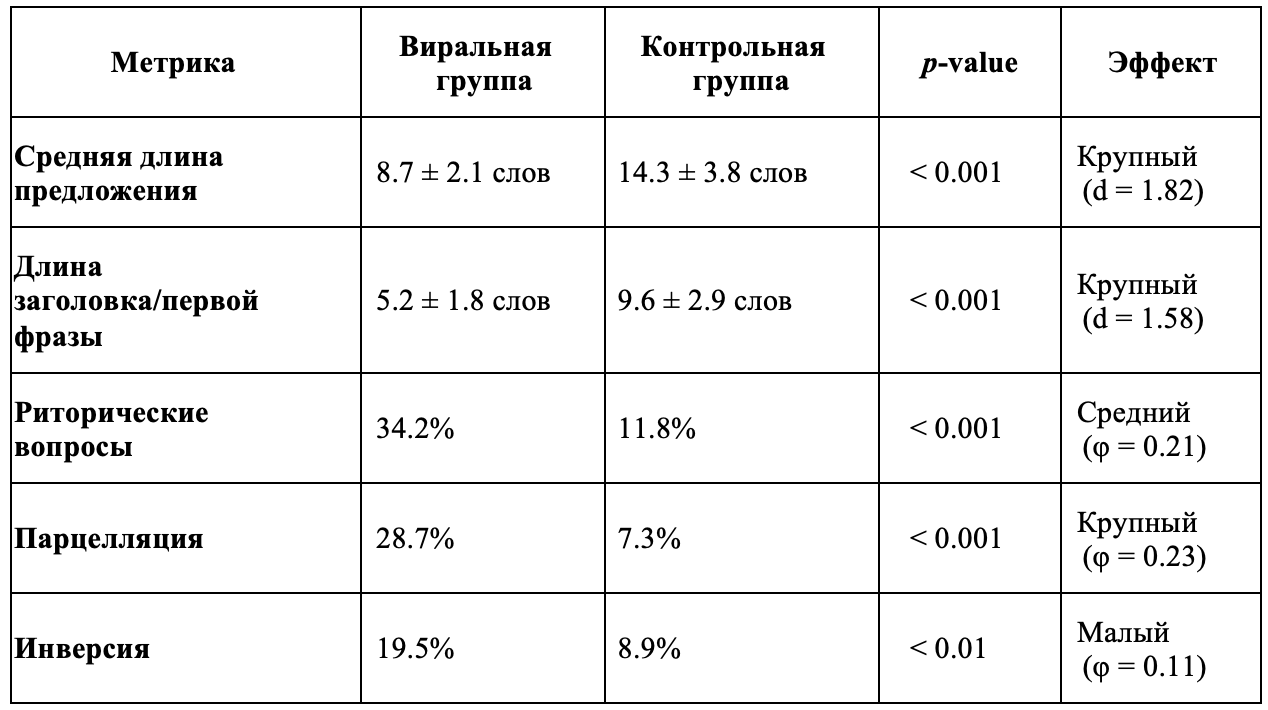
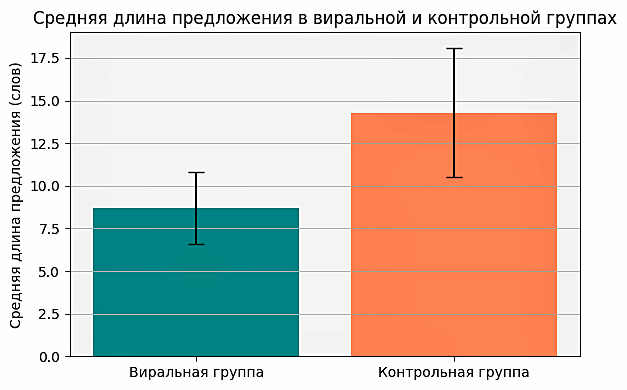
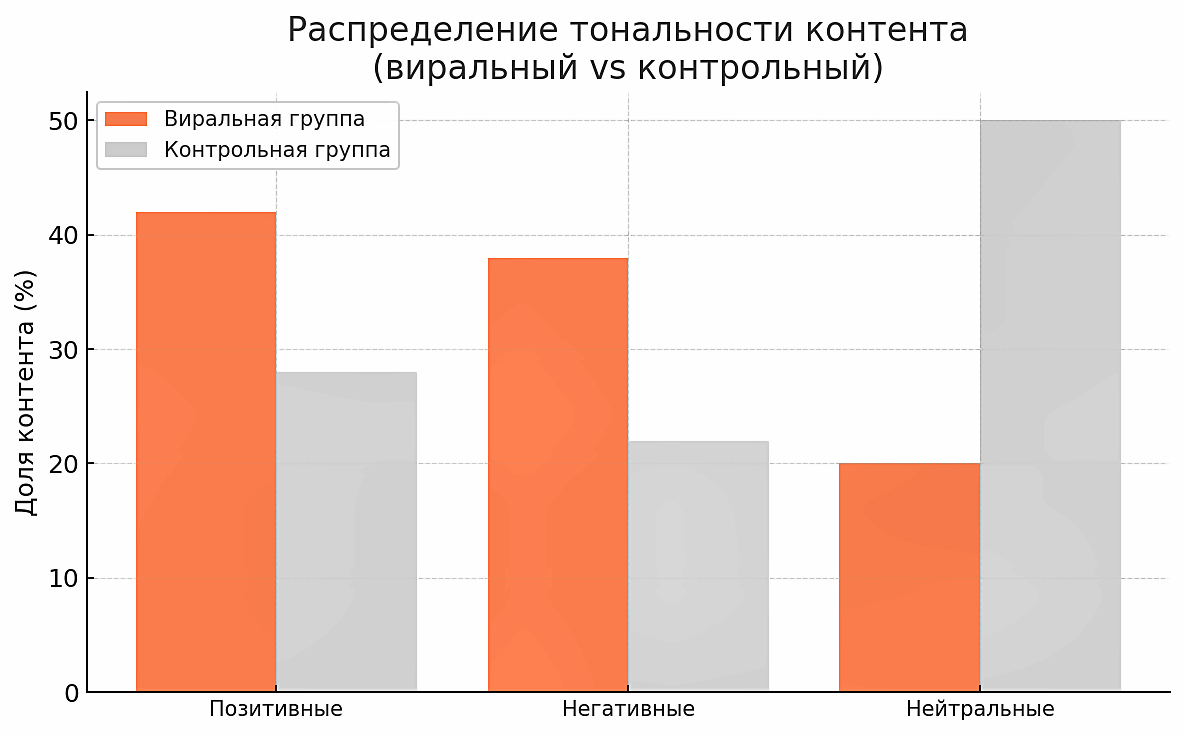
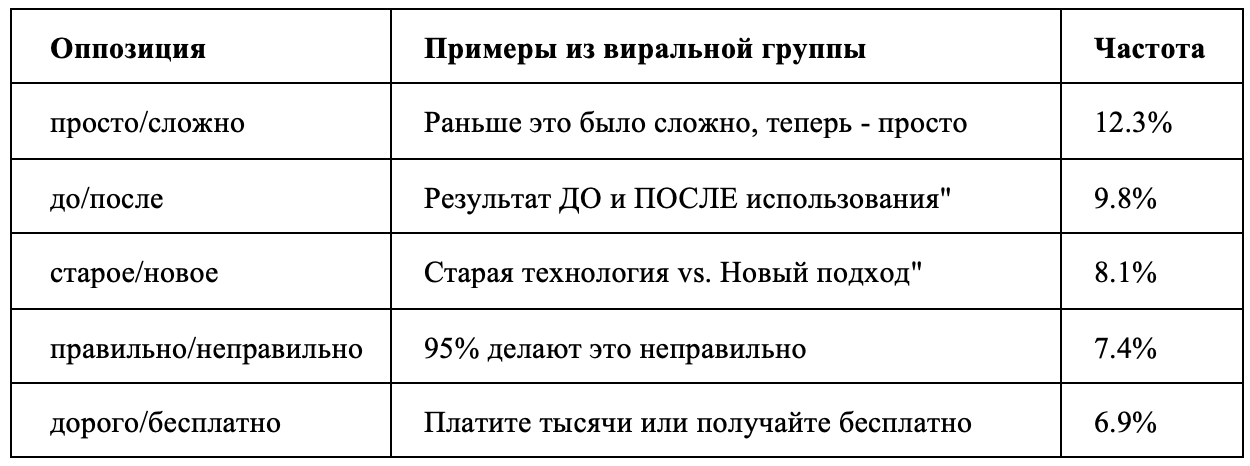
The article presents a linguistic analysis of the mechanisms underlying viral content dissemination in an algorithmically governed digital media environment. The relevance of the study is determined by the ongoing transformation of public communication on digital platforms, where the selection and amplification of messages are increasingly driven by formalized engagement metrics rather than interpersonal social ties. This shift necessitates a reconsideration of traditional approaches to the analysis of public discourse and the development of conceptual tools that account for algorithmic mediation. The research problem lies in identifying stable linguistic characteristics of algorithmically amplified content and in describing the structure of the algorithmic idiolect – a specific speech register adapted to the criteria of platform-based selection and ranking. Particular attention is paid to the relationship between formal linguistic strategies, discursive organization of messages, and the metrics monitored by platform algorithms. The study employs an interdisciplinary approach combining methods from media linguistics, communication theory, and applied data analysis. The empirical basis consists of a corpus of 2,000 social media posts published between January and June 2025, divided into a viral subset (1,000 posts with the highest engagement indicators) and a control subset (1,000 posts with average engagement). Quantitative methods were applied, including calculation of average sentence length, frequency of expressive constructions, automated sentiment analysis using a neural network model, and content analysis of pragmatic and multimodal elements. The statistical significance of the observed differences was tested using a Student's t-test and a chi-squared test. The results demonstrate that viral content is characterized by syntactic reduction, increased lexical expressivity, polarity of sentiment, reliance on binary oppositions, and a high degree of multimodality, which significantly enhances user engagement. Based on the identified features, the study substantiates the notion of an algorithmic idiolect of virality as a standardized linguistic register of digital communication optimized for platform algorithms.
Figures
Akhrenova, N. A., Serbin, V. A. (2026). Linguistics of algorithmic logic in viral communication, Research Result. Theoretical and Applied Linguistics, 12 (1), 3–37.















While nobody left any comments to this publication.
You can be first.
Akhrenova, N. A. (2025). The Evolution of Political Media Rhetoric: From Monologue to Digital Fragmentation, Medialingvistika, 12 (S), 168–172. (In Russian)
Akhrenova, N. A. (2024). Internet-lingvistika: dominantny podkhod [Internet Linguistics: The Dominant Approach], Rusains, Moscow, Russia. (In Russian)
Akhrenova, N. A., Golubtsova, E. V., Zenenko, N. V. et al. (2025). Lingvopragmaticheskie osobennosti kommunikatsii vlasti i obshchestva v tsifrovoy srede: ot gosudarstvennykh portalov k iskusstvennomu intellektu [Linguo-pragmatic features of communication between government and society in the digital environment: from state portals to artificial intelligence], in Informatsionnaya voyna: formy vedeniya i metody lingvisticheskogo analiza [Information war: forms and methods of linguistic analysis], FLINTA, Moscow, Russia. (In Russian)
Antonova, A. A. (2020). Emotional and Presentational Strategies of Media Texts in the Digital Environment, Vestnik Moskovskogo universiteta. Seriya 10: Zhurnalistika, 1, 34–49. (In Russian)
Vartanova, E. L. (2019). The Principle of Presentationality and Emotional Enhancement of Content in New Media, MediaAlmanakh, 4, 15–22. (In Russian)
Kaminskaya, T. L. (2021). Expressive Devices and Media Text Attractiveness: Clip-based Presentation in Online Communication, Vestnik Voronezhskogo gosudarstvennogo universiteta. Seriya: Filologiya. Zhurnalistika, 2, 88–95. (In Russian)
Krapivin, M. Yu. (2025). Viral Media Text: From Attractiveness to Algorithmic Optimization, Medialingvistika, 31 (1), 52–66. (In Russian)
Leontovich, A. V. (2017). The Impact of Internet Communication on Contemporary Speech Practices, Yazyk i kultura, 39, 120–128. (In Russian)
Maksimenko, O. V. (2013). Media Text Attractiveness: Linguostylistic Techniques of Capturing Attention, Voprosy zhurnalistiki, 6,
45–53. (In Russian)
Klushina, N. I., Itskovich, T. V. and Selezneva, L. V. (eds.) (2024). Medialingvistika v sovremennoy nauchnoy paradigme [Medialinguistics in the Contemporary Scientific Paradigm], FLINTA, Moscow, Russia. (In Russian)
Starovoit, M. V. (2021). Clip-based Presentation of Information as a Factor of Content Virality, Trudy SPbGU. Seriya 9: Filologiya, 27 (4), 112–125. (In Russian)
Chernyavskaya, V. E. (2017). Diskurs vlasti i vlast diskursa: problemy rechevogo vozdeystviya[Discourse of power and the power of discourse: problems of speech influence], 3rd ed., FLINTA, Moscow, Russia. [Online], available at: https://dokumen.pub/540300-9785893499872.html (Accessed 25 December 2025). (In Russian)
Amoore, L. (2020). Cloud Ethics: Algorithms and the Attributes of Ourselves and Others, Duke University Press, Durham, NC, USA. (In English)
Ananny, M. and Crawford, K. (2018). Seeing without knowing: Limitations of the transparency ideal in algorithmic accountability, New Media & Society, 20 (3), 973–989. (In English)
Arjona-Martín, J. B., Gutiérrez-García, E. and López-de-Ayala, M. C. (2020). Algoritmos en redes sociales y estrategias de visibilidad mediática, Media and Communication, 8 (4),
31–44. (In Spanish)
Berger, J. A. (2013). Contagious: Why Things Catch On, Simon & Schuster, New York, NY, USA. 256 p. (In English)
Berger, J. A. and Milkman, K. L. (2012). What makes online content viral?, Journal of Marketing Research, 49 (2), 192–205. (In English)
Bucher, T. (2018). If… Then: Algorithmic Power and Politics, Oxford University Press, New York, NY, USA. (In English)
Dawkins, R. (1976). The Selfish Gene, Oxford University Press, Oxford, UK. (In English)
Dillet, B. (2020). Speaking to algorithms? Rhetorical political analysis as technological analysis, Politics, 42 (2), 231–246. (In English)
Gillespie, T. (2014). The Relevance of Algorithms, in Gillespie, T., Boczkowski, P. J. and Foot, K. A. (eds.), Media Technologies: Essays on Communication, Materiality, and Society, MIT
Press, Cambridge, MA, USA, 167–193. (In English)
Hakoköngäs, E., Halmesvaara, O. and Sakki, I. (2020). Persuasion through bitter humor: Multimodal discourse analysis of rhetoric in internet memes of two far-right groups in Finland, Social Media + Society, 6 (2). [Online], available at: https://doi.org/10.1177/2056305120
921575 (Accessed 25.12.2025). (In English)
Hemsley, J. (2011). Virality: Developing a rigorous and useful definition of an information diffusion process, working paper, Syracuse University. [Online], available at: https://ssrn.com/abstract=3129424 (Accessed 25.12.2025). (In English)
Jenkins, H. (2006). Convergence Culture: Where Old and New Media Collide, New York University Press, New York, NY, USA. (In English)
Jenkins, H., Ford, S. and Green, J. (2013). Spreadable Media: Creating Value and Meaning in a Networked Culture, New York University Press, New York, NY, USA. [Online], available at: https://www.researchgate.net/publication/298428278_Henry_Jenkins_Sam_Ford_Joshua_Green_Spreadable media Creating Value and meanin in A Networked Culture New York New York University Press 2013 (Accessed 25.12.2025). (In English)
Introna, L. D. (2016). Algorithms, governance, and governmentality: On governing academic writing, Science, Technology & Human Values, 41 (1), 17–49. (In English)
Kitchin, R. (2017). Thinking critically about and researching algorithms, Information, Communication & Society, 20 (1), 14–29. (In English)
Latour, B. (2005). Reassembling the Social: An Introduction to Actor-Network-Theory, Oxford University Press, Oxford, UK. [Online], available at: https://academic.oup.com/book/52349 (Accessed 25.12.2025). (In English)
Leskovec, J., Adamic, L. A. and Huberman, B. A. (2007). The dynamics of viral marketing, ACM Transactions on the Web, 1 (1). [Online], available at: https://www.researchgate.
net/publication/308062589_The_Dynamics_of_Viral_Marketing (Accessed 25.12.2025. (In English)
Nahon, K. and Hemsley, J. (2013). Going Viral: Everybody’s Guide to the Viral Phenomenon, Polity Press, Cambridge, UK. (In English)
Narayanan, A. (2023). Understanding Social Media Recommendation Algorithms, Knight First Amendment Institut. [Online], available at: https://knightcolumbia.org/content/
understanding-social-media-recommendation-algorithms (Accessed 25.12.2025). (In English)
Pariser, E. (2011). The Filter Bubble: What the Internet Is Hiding from You, Penguin Press, New York, NY, USA. (In English)
Quan, Y. (2023). Suanfa xiuci: meijie shijian xin xingtai yu shuzi renwen xin quxiang [Algorithmic rhetoric: A new form of media practice and a new orientation of digital humanities], Jianghuai Forum, 2, 52–61. (In Chinese)
Quan, Y. (2023). Yinxing chaquanli: suanfa chuanbo yanjiu [Invisible Superpower: Research on Algorithmic Communication], Social Sciences Academic Press, Beijing, China. (In Chinese)
Roumbanis, L. (2025). On algorithmic mediations , European Journal of Social Theory. [Online], available at: https://journals.sagepub.com/doi/10.1177/13684310251319677 (Accessed 25.12.2025). (In English)
Rogers, E. M. (1962). Diffusion of Innovations, Free Press, New York, NY, USA. (In English)
Rushkoff, D. (1994). Media Virus! Hidden Agendas in Popular Culture, Ballantine Books, New York, NY, USA. (In English)
Van Dijk, T. A. (2020). The Network Society: Social Aspects of New Media, 4th ed., Sage, London, UK. (In English)
van Dijck, J., Poell, T. and de Waal, M. (2018). The Platform Society: Public Values in a Connective World, Oxford University Press, New York, NY, USA. (In English)